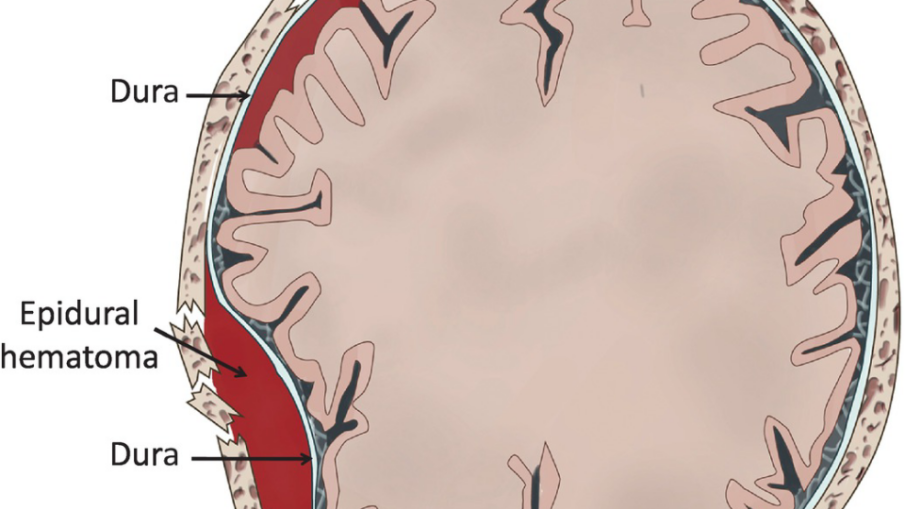
An epidural hematoma (EDH) is a collection of blood that forms between your skull and the dura mater, the outermost protective membrane covering your brain. The cause is usually an artery that gets torn by a skull fracture. Symptoms include severe headache and loss of consciousness. This can be a life-threatening condition that requires emergency surgery.
Causes of epidural hematoma
Accidents/Impacts
Motorcycle crashes, bicycle falls, skateboarding accidents, or impacts from contact sports.
Traumatic Brain Injury (TBI)
The leading cause, often occurring after a blow to the side of the head (temporal bone). An epidural hematoma (EDH) is usually caused by a head injury. A skull fracture occurs in 75% of the cases. A skull fracture that tears the middle meningeal artery is the most common source of bleeding.
Non-trauma causes
These causes include: Infection/abscess, Coagulopathy (your blood doesn’t clot as it normally should), Hemorrhagic tumors (tumors that cause bleeding).
Age
More common in younger people (20-30 age group) because the dura is not as tightly attached to the skull, allowing for faster accumulation, though it can happen at any age.
In conclusion, An epidural hematoma (EDH) usually develops under a fractured area of your skull. This is a very serious, potentially life-threatening condition that requires immediate medical care. The best advice for preventing EDHs from occurring in the first place is to wear protective headgear when work or leisure activities place your head at risk for head trauma and serious injury. Also, always wear your seatbelt in your vehicle. All information are gotten from Cleveland clinics.