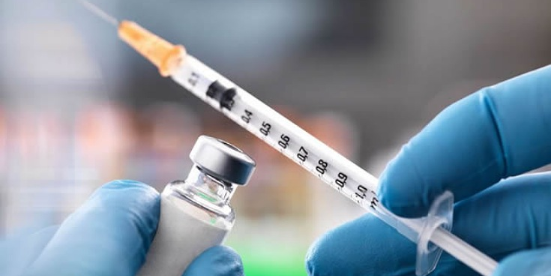
The first human trial to evaluate a candidate vaccine against coronavirus disease 2019 has begun in Seattle, US health officials said on Monday.
“The open-label trial will enrol 45 healthy adult volunteers ages 18 to 55 years over approximately 6 weeks,” the US National Institutes of Health said in a statement.
“The first participant received the investigational vaccine today.”
But the candidate would still need to progress through various more stages, known as phases, to prove it works and is safe.
US officials have estimated it may take a year to 18 months before it becomes available if everything goes to plan.
The vaccine is called mRNA-1273 and was developed by NIH scientists and collaborators at biotechnology company Moderna, which is based in Cambridge, Massachusetts.
Funding was also provided by the Oslo-based Coalition for Epidemic Preparedness Innovations (CEPI).
“Finding a safe and effective vaccine to prevent infection with SARS-CoV-2 is an urgent public health priority,” said Anthony Fauci, head of infectious diseases at the NIH.
“This Phase 1 study, launched in record speed, is an important first step toward achieving that goal.”
Coronaviruses are spherical and have spikes protruding from their surface, giving them a crown-like appearance. The spike binds to human cells, allowing the virus to gain entry.
The Moderna candidate vaccine carries the genetic information of this spike in a substance called “messenger RNA.”
Injecting human tissue with the spike’s messenger RNA makes it grow inside the body, thereby eliciting an immune response without having actually infected a person with the full-blown virus.