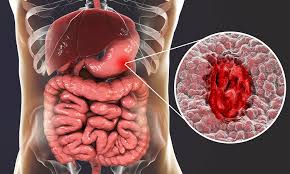
Stomach ulcer
A stomach ulcer occurs when stomach acid eats through your protective stomach lining, producing an open sore. Typical signs and symptoms include burning stomach pain and indigestion. Ulcers heal when the conditions causing them go away. A healthcare provider must identify the cause of your ulcer to recommend the right treatment.
pylori infection – pylori is a very common bacterial infection that affects up to half of people worldwide. It primarily lives in your stomach. In many people, it doesn’t seem to cause any problems. But sometimes, it overgrows and takes over. As the bacteria continue to multiply, they eat into your stomach lining, causing chronic inflammation that leads to gastric ulcers.
NSAIDs – NSAIDs (nonsteroidal anti-inflammatory drugs) are common over-the-counter pain relievers, like ibuprofen, naproxen and aspirin. These medications irritate your stomach lining on contact, and they also inhibit some of the chemicals that defend and repair it.
Other infections.
Rarely, other bacterial, viral or fungal infections can take over in your stomach and cause erosive gastritis.
Zollinger-Ellison syndrome. This is a rare condition that causes your stomach to produce too much gastric acid, which erodes the lining.
Severe physiological stress.
You may develop a stress ulcer if your body is struggling to recover from a life-threatening illness or injury. Severe physiological stress changes your pH balance, making your stomach more acidic.
And finally, If you’re taking your medications as prescribed and avoiding things that might aggravate the ulcer, it should heal within a few weeks. Your healthcare provider may conduct follow-up tests to make sure the ulcer has healed, and any infection has cleared. All informations are gotten from Cleveland clinics.