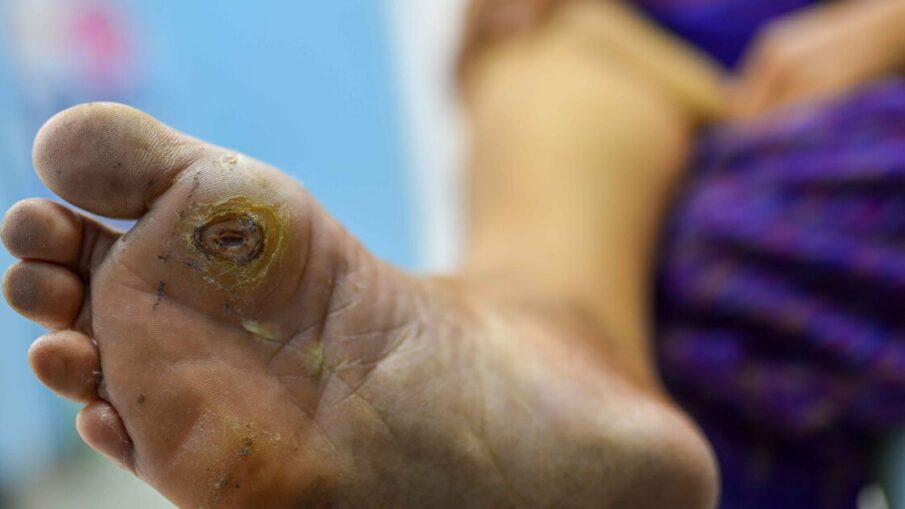
Toe ulcers
Ulcers, wounds in your skin that can get infected and take a long time to heal, are sometimes found on your feet and toes. People with diabetes who have neuropathy are most likely to get these ulcers. Ulcers can get infected and sometimes require amputation of your foot or toes. Healing the ulcer might include nonsurgical and surgical treatments.
Diabetes (Neuropathy & Peripheral Arterial Disease):
Uncontrolled blood sugar can damage nerves (neuropathy), causing you to lose sensation so you don’t feel toe injuries. Diabetes also narrows blood vessels, reducing blood flow and severely slowing down the healing process.Poor Circulation
(Ischemia)
Reduced blood flow to the lower extremities means the tissues lack the oxygen and nutrients necessary to heal. This often leads to arterial ulcers, which are highly painful and frequently appear on the tips of the toes or in between them.
Physical Trauma & Friction
Stubbing your toe, getting a blister, or wearing shoes with a tight toe box causes rubbing and pressure that can break the skin. Combined with an underlying condition like nerve damage, these unnoticed injuries easily progress into ulcers.
Foot Deformities
Conditions like bunions, hammertoes, or unusually formed toes create abnormal pressure points within your shoes, making the skin prone to sores and breakdowns.
Infections
An untreated minor cut or ingrown toenail can become infected by bacteria. The infection breaks down surrounding tissue and can spread rapidly, preventing the skin from healing.
In conclusion, It can be distressing to discover an open sore on your foot or toe. You might not know what caused it, it might not be healing and, if you have neuropathy from diabetes, you might not even feel it. Keep in mind that your healthcare provider can successfully treat your ulcer, especially if it’s found early. If left untreated, an ulcer can lead to serious complications. Information are gotten from Cleveland and Healthline clinics.