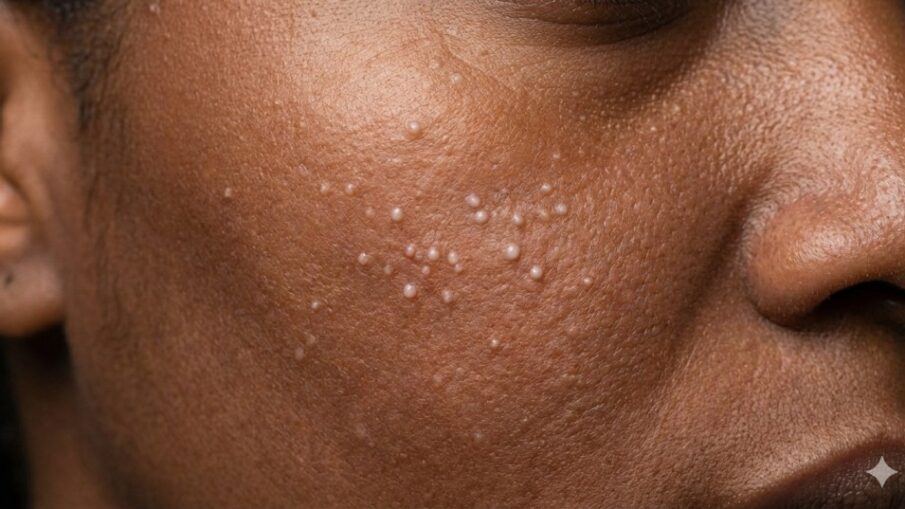
Milia is a common skin condition that causes small white bumps (cysts) under the surface of your skin. Milia (milk spots) are small, white cysts on your skin. Cysts are filled pockets under the surface of your skin. The most common place to find milia are on your face. Milia are harmless and only affect your appearance
Causes of milia
Blocked sweat ducts and pores
Milia commonly occur when dead skin cells (keratin) fail to shed properly and become trapped in small pockets under the skin. Unlike acne, milia are not caused by bacteria but by physical blockage of pores or sweat ducts.
Skin damage or trauma
Burns, blisters, rashes, excessive sun exposure, laser treatments, and aggressive cosmetic procedures can damage the skin. During healing, keratin may become trapped beneath the new skin layer, leading to secondary milia.
Lack of proper exfoliation
When dead skin cells accumulate due to inadequate exfoliation, they can trap keratin under the skin’s surface. This is common in people with dry or aging skin, where cell turnover is slower.
Genetic and developmental factors
Some individuals are genetically predisposed to milia. In newborns, milia develop because sweat ducts and skin structures are not yet fully developed, causing keratin to become temporarily trapped.
And finally, Milia don’t need treatment because they’re not harmful. If you don’t like how milia look on your skin, talk to your healthcare provider about removing them. All information are gotten from Cleveland clinics.